
Next-generation data analytics support a Learning Health System for Maryland, enabling dynamic optimization of clinical data to inform clinical decision-making at point of care, ultimately improving the well-being of patients across the state of Maryland and providing a model ripe for replication across the nation.
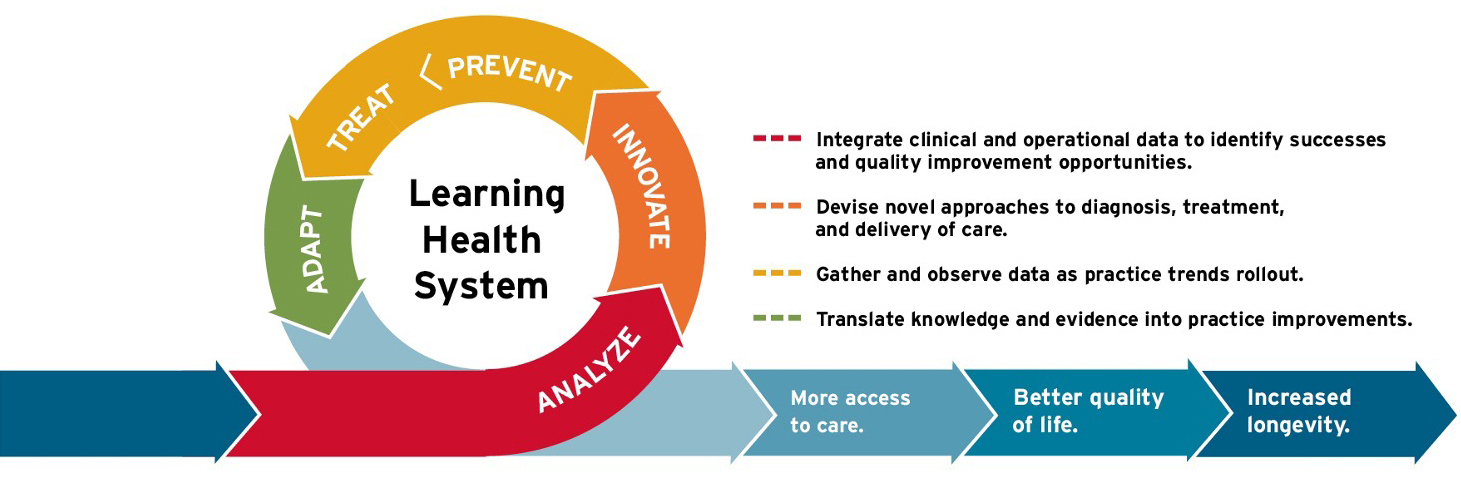
Example projects in support of LHS
- Reducing recurrent hypoglycemic episodes: In collaboration with a major pharma company, IHC investigators are exploring strategies to reduce recurrent hypoglycemic episodes using electronic health record data and patient-reported outcomes, thus improving patient outcomes and reducing health care costs.
- Improving HIV care: IHC investigators have built a prediction model to anticipate lapses in HIV care, setting the stage for a pragmatic trial testing point-of-care interventions to reduce lapses. We expect this to lead to improved patient outcomes and decreased transmission.
- Congestive heart failure (CHF): IHC investigators used natural language processing to assemble a registry of over 40,000 CHF patients. This registry will facilitate emulated clinical trials testing the efficacy of various goal-directed medical therapies.
- Down Syndrome: IHC researchers have established one of the largest Down Syndrome cohorts in the US, comprising 1,450 patients across the UMMS System with comprehensive clinical data. A large multidisciplinary team will implement innovative AI approaches, including large language models, to investigate cardiovascular morbidity predictors, obstructive sleep apnea contributions, and inpatient admission risk factors.
- Hypertrophic cardiomyopathy (HCM): IHC investigators have built a rigorous cohort of patients with HCM and mapped the proximity of HCM patients to toxic exposure. For the first time ever in this disease, an association between prevalence and environmental risk factor was observed. This project has transformative potential and is directly relevant to developing treatments.