
Applied Artificial Intelligence
Artificial Intelligence (AI) is revolutionizing healthcare from data analysis to patient care. AI is being used to identify diseases, select patients, personalize treatment, predict outcomes, and more. A growing number of healthcare sectors rely on robotics, biosensors, and medical imaging tools that are powered by AI. The latest advancements in large language models also improve health outcomes by enhancing interactions between care providers and patients and pave the way forward for chatbots or robots embodied with healthcare data.
AI is transforming the way we analyze data. The UM-IHC conducts research in AI and applies it to various datasets, including bio-monitoring wearable, medical, and sensor data. The research involves exploring and analyzing the data using various learning models to find hidden patterns and relations. This facilitates knowledge discovery that can be used to tackle health-related problems and can eventually lead to better health in the community.
Some potential AI research topics include tools to get medical insights, medical data analysis to identify tumors, injuries, or diseases, outcome predictions from sensor data, personalized prevention, drug discovery driven by big data, etc.

Staff
- Nikhil Shah, MS
- Amritansh Suryavanshi, BS
Trainees
- Pranav Kulkarni, BS
Collaborators
- Jana Delfino, PhD (FDA)
- Ang Li, PhD (UMCP)
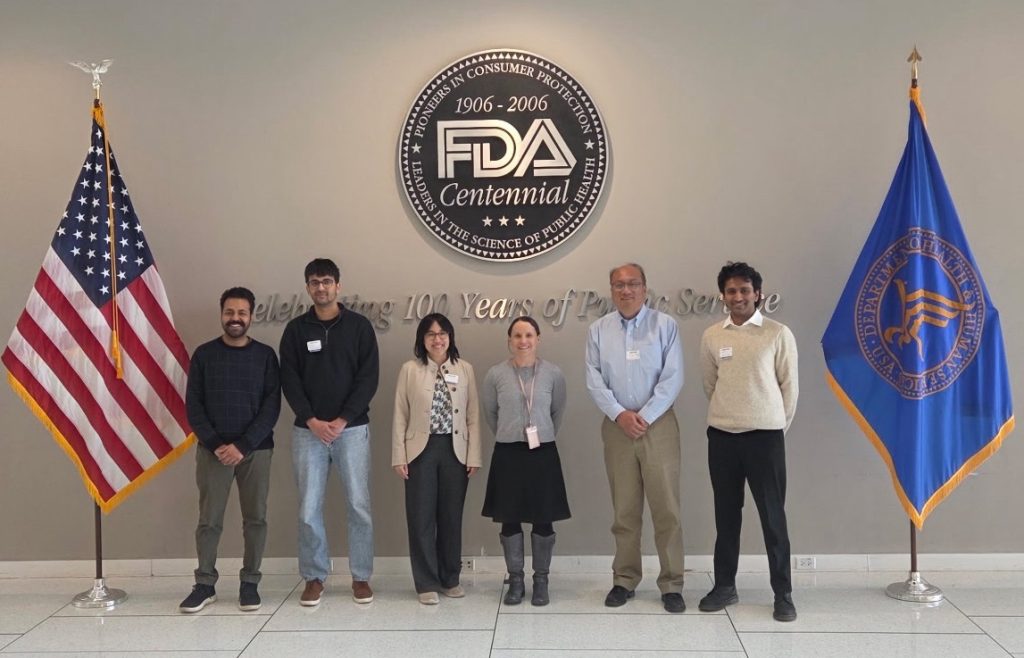
Safe, Trustworthy Medical Imaging AI for Patient Care
The UM-IHC AI-Enabled Medical Imaging team within the Applied AI Center, co-led by Dr. Heng Huang, PhD and Dr. Florence X. Doo, MD, MA, CIIP, is an interdisciplinary research program poised to advance the safe and sustainable translation of medical imaging AI into clinical care for patients across Maryland, the U.S., and worldwide. The group unites the computational expertise of the University of Maryland, College Park with the clinical and regulatory science expertise of the University of Maryland School of Medicine and the University of Maryland Medical System (UMMS), and is grounded in radiology, computer science, biomedical engineering, and regulatory science research aimed at:
- Developing the computational methods, datasets, and data infrastructure needed to translate medical imaging AI from research into clinical practice
- Improving the quality, safety, and equity of imaging-based diagnosis and care delivery through AI-enabled tools and methods
- Collaborating with the University of Maryland Medical System (UMMS) to bridge clinical imaging data with AI research and to evaluate AI tools in real-world care settings with regard to diagnostic performance, patient outcomes, clinician workflow, and equitable access
- Collaborating with other Centers and areas of discovery within the UM-IHC to support imaging- and AI-related research being conducted across the Institute
- Partnering with federal regulatory agencies, professional societies, and the broader biomedical community to advance frameworks for the safe, real-world deployment and post-market evaluation of clinical AI
Ongoing Research Areas
The group’s work spans the three pillars required for safe medical imaging AI — data infrastructure, clinical models, and real-world evaluation:
- Data infrastructure
- Medical imaging data pipelines that turn UMMS clinical imaging into research-ready cohorts
- Open-release multi-institutional imaging datasets for the broader research community
- Annotation, curation, and benchmarking methods for clinical AI
- Clinical AI models
- Cardiovascular applications
- Oncologic imaging
- Quantitative imaging biomarkers and radiomics
- Foundation models and digital twins
- Agentic clinical workflows
- Sustainable and efficient models
- Real-world evaluation
- Regulatory science for clinical AI safety
- Post-market AI surveillance and test-bed infrastructure for clinical AI
- Methods for evaluating AI deployment, performance drift, and clinician workflow in routine care