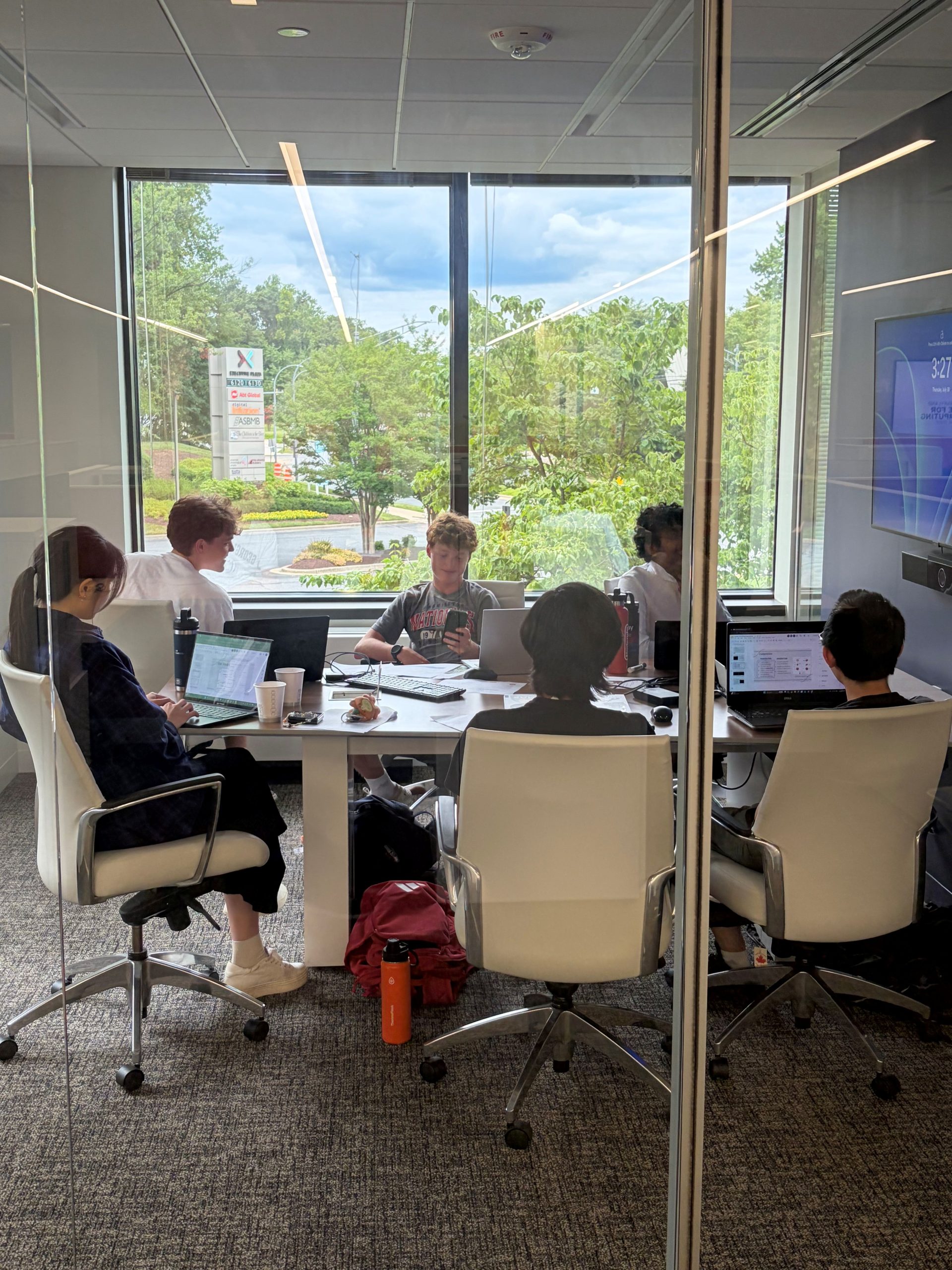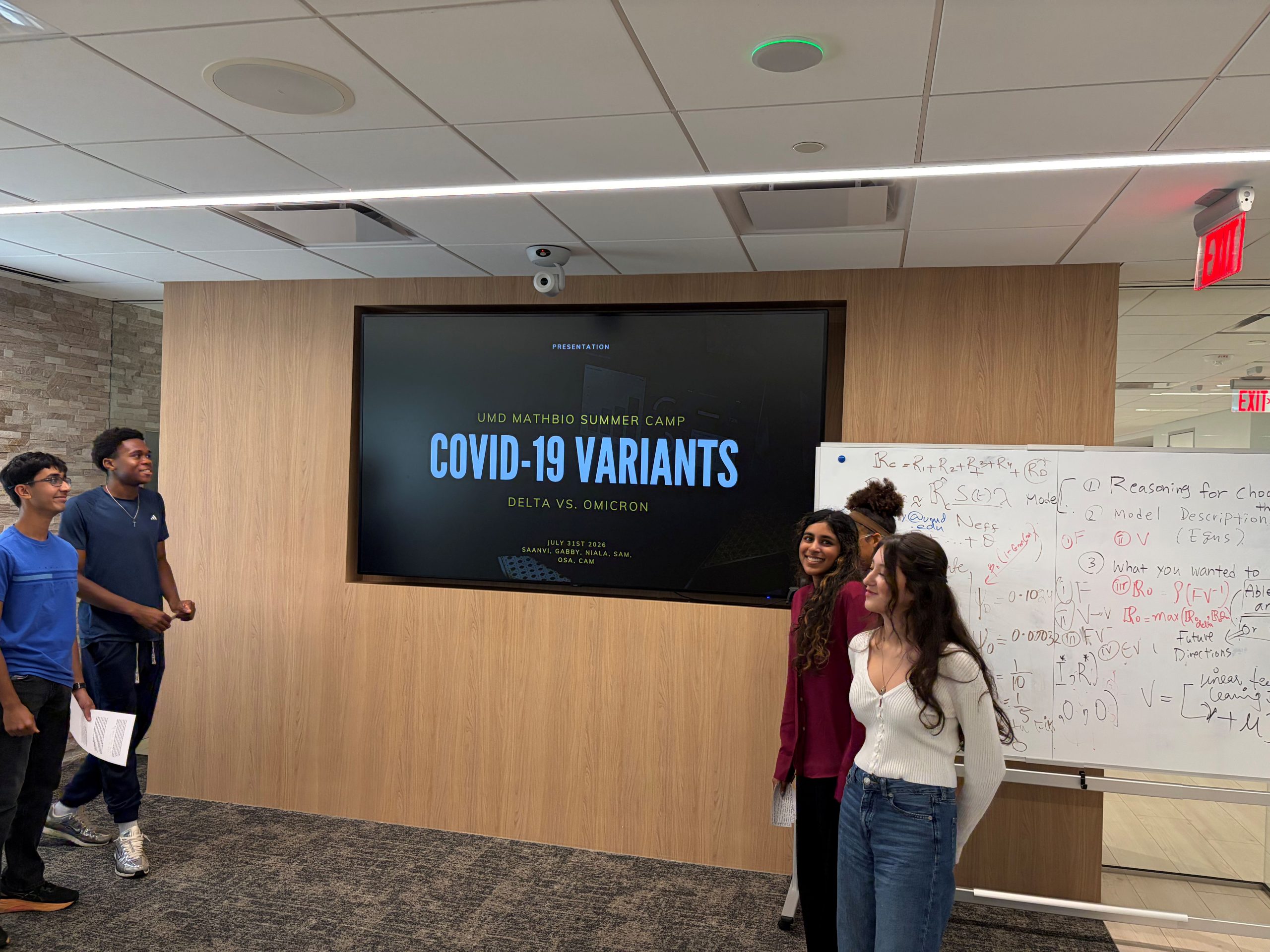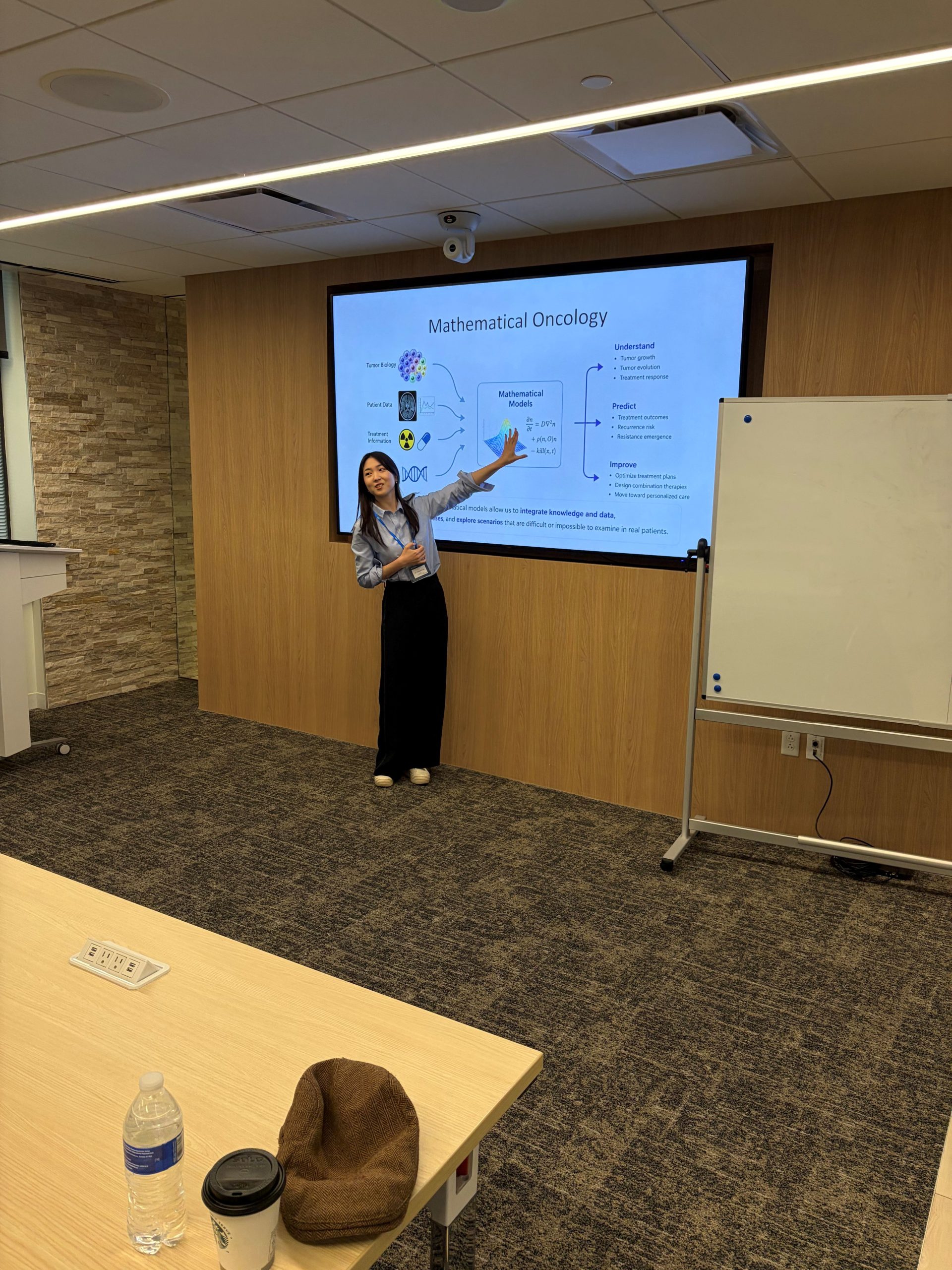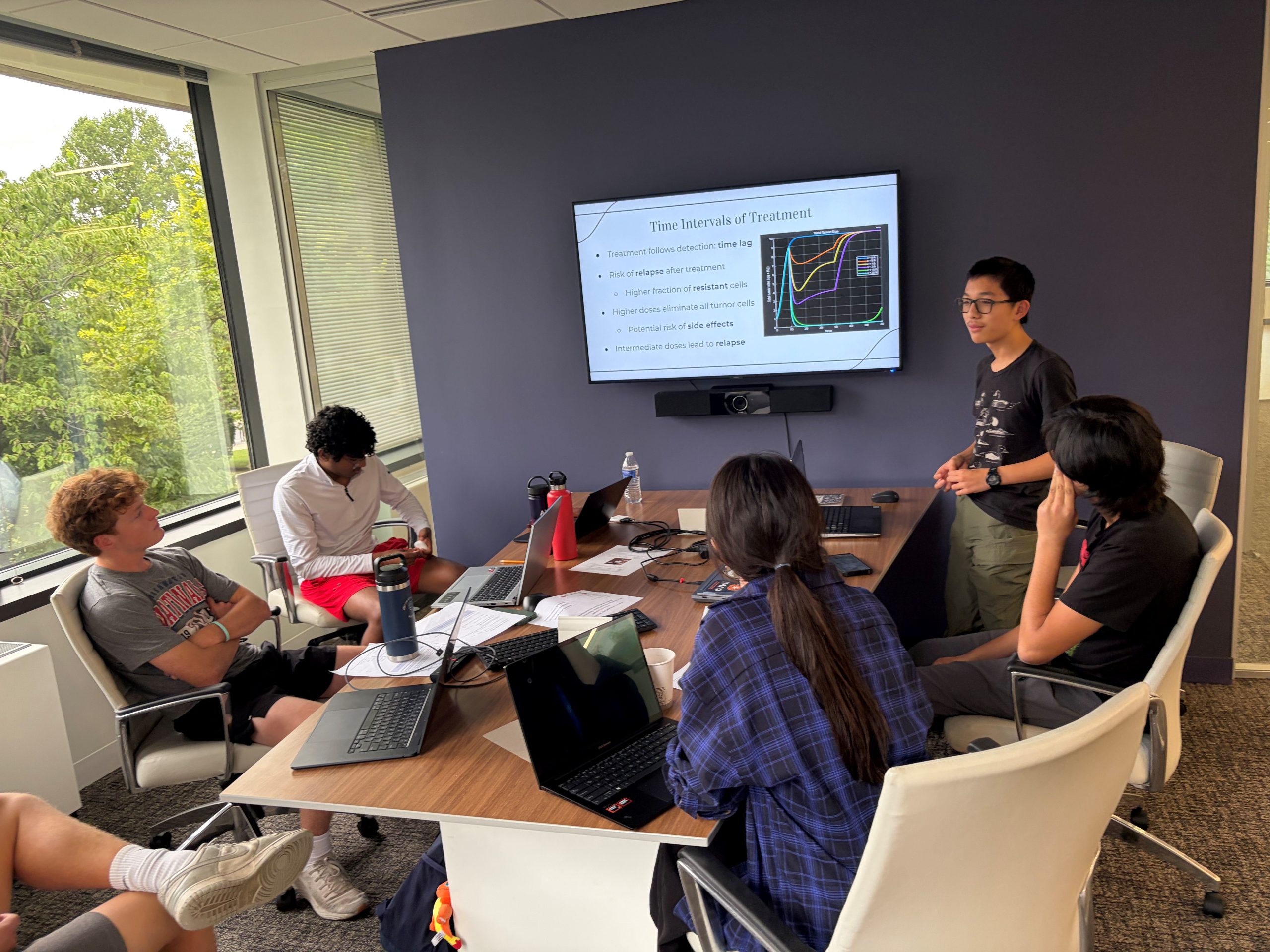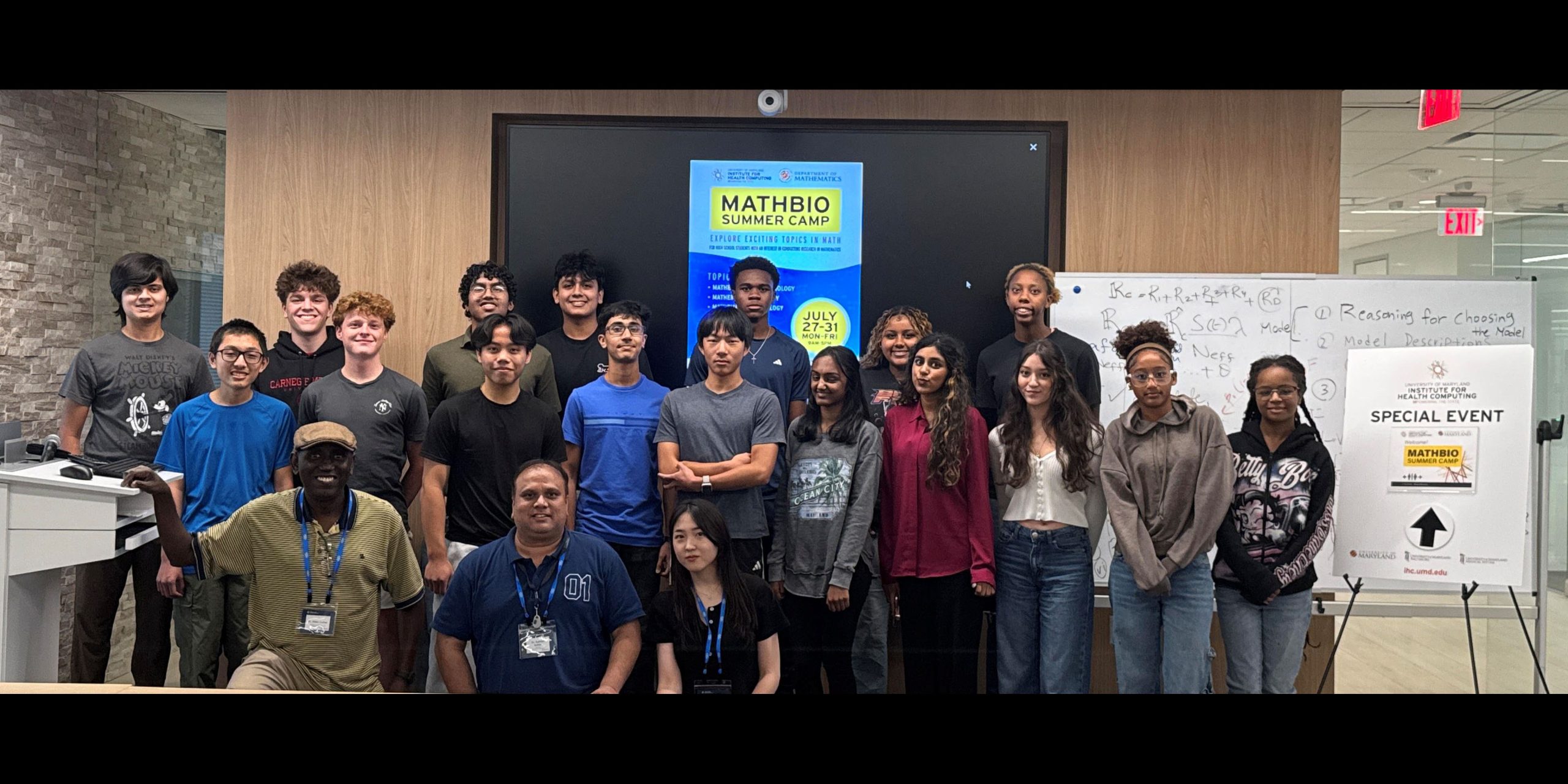
The weeklong MathBio camp emphasized the value of mathematical modeling in addressing human disease dynamics and control.
Summer camp isn’t always about bonfires and bug bites. At the University of Maryland Institute for Health Computing (UM-IHC), 25 local high school students—most from Montgomery County—spent a week in July diving deep into the mathematical modeling of human diseases.
The inaugural camp, called MathBio, was held in North Bethesda and led by UM-IHC faculty member Abba Gumel, a Distinguished University Professor of Mathematics at the University of Maryland who uses advanced mathematical tools to study the spread and control of infectious diseases.
“The students were bright, creative young people who arrived at the camp eager to learn something new,” said Gumel, who has a joint appointment in the Institute for Physical Science and Technology and holds The Michael and Eugenia Brin Endowed E-Nnovate Chair in Mathematics. “We created MathBio as part of the UM-IHC mission to build a pipeline of future scientists in Maryland, and I was thrilled to see so much talent in the room from the start.”
A lesson in teamwork
MathBio, funded largely by the UM-IHC with additional support from UMD’s College of Computer, Mathematical, & Natural Sciences, was a team effort in more ways than one. Institute researchers Hyunah Lim, Salihu Musa and Salman Safdar lectured and helped mentor the students, while UMD biological sciences major Vasisht Ishwar and Biocomputational Engineering Program Director and Faculty at the Universities at Shady Grove Lan Ma gave guest lectures.
The students, too, collaborated—teaming up on a variety of research projects: modeling the transmission dynamics and control of COVID-19 variants; assessing the impact of pre-exposure prophylaxis on efforts to end the HIV epidemic in the United States; modeling cancer dynamics, drug resistance and control in the context of patient-specific therapies; and modeling the spread and control of tuberculosis.
“It was great to see how well they worked together as research teams, sharing ideas and really listening to each other,” noted Declan McKenna, a recent graduate from South River High School in Edgewater, Maryland, whom Gumel tapped to be camp assistant. McKenna, who is heading to the University of California, Berkeley this fall, has been working in Gumel’s lab for more than a year on modeling infectious diseases. He and Ishaan Benerjee (a junior at Blair High School) are now finalizing a manuscript on assessing the impact of measles vaccination for submission to an undergraduate journal.
After several days of lively discussion, repeated computations, simulations and faculty and mentor guidance, the teams presented their findings to the larger group.
“For some of the students, putting together slides and giving the talk was the hardest part,” noted McKenna, although he said the content and mathematical exercises were also pretty challenging. “You could tell the math was hard for some of them, but that’s good. It really made them think.”
In their post-camp survey, the students credited the faculty members and mentors with guiding them through the most challenging mathematical concepts and pointed to a range of takeaways—from how machine learning and artificial intelligence (AI) are integrated into mechanistic models to enhance their predictive capacity to how these models can be used to answer specific questions in epidemiology and cancer evolution, leading to saving lives. (Participants also praised the daily lunches and the fact that the camp was free of charge.)
“Real-world applications can sometimes get lost when you’re working through complex mathematical computations, so I’m delighted that this aspect came through clearly in the exercises,” Gumel said.
Motivated by the success of this year’s inaugural camp, Gumel hopes to offer MathBio again in 2027, “to give another cohort of students the advanced tools they need to tackle some of the greatest public health challenges of our time. The future is certainly bright for improved public health here in Maryland.”
UM-IHC Co-Executive Director Adam Porter, a professor in UMD’s Department of Computer Science, couldn’t agree more.
“It’s been energizing to have these intelligent young people here developing new skills and learning from our phenomenal faculty,” he said. “Education is a crucial part of our mission, and I’m pleased we could give these students some of the foundational knowledge they’ll need going forward.”