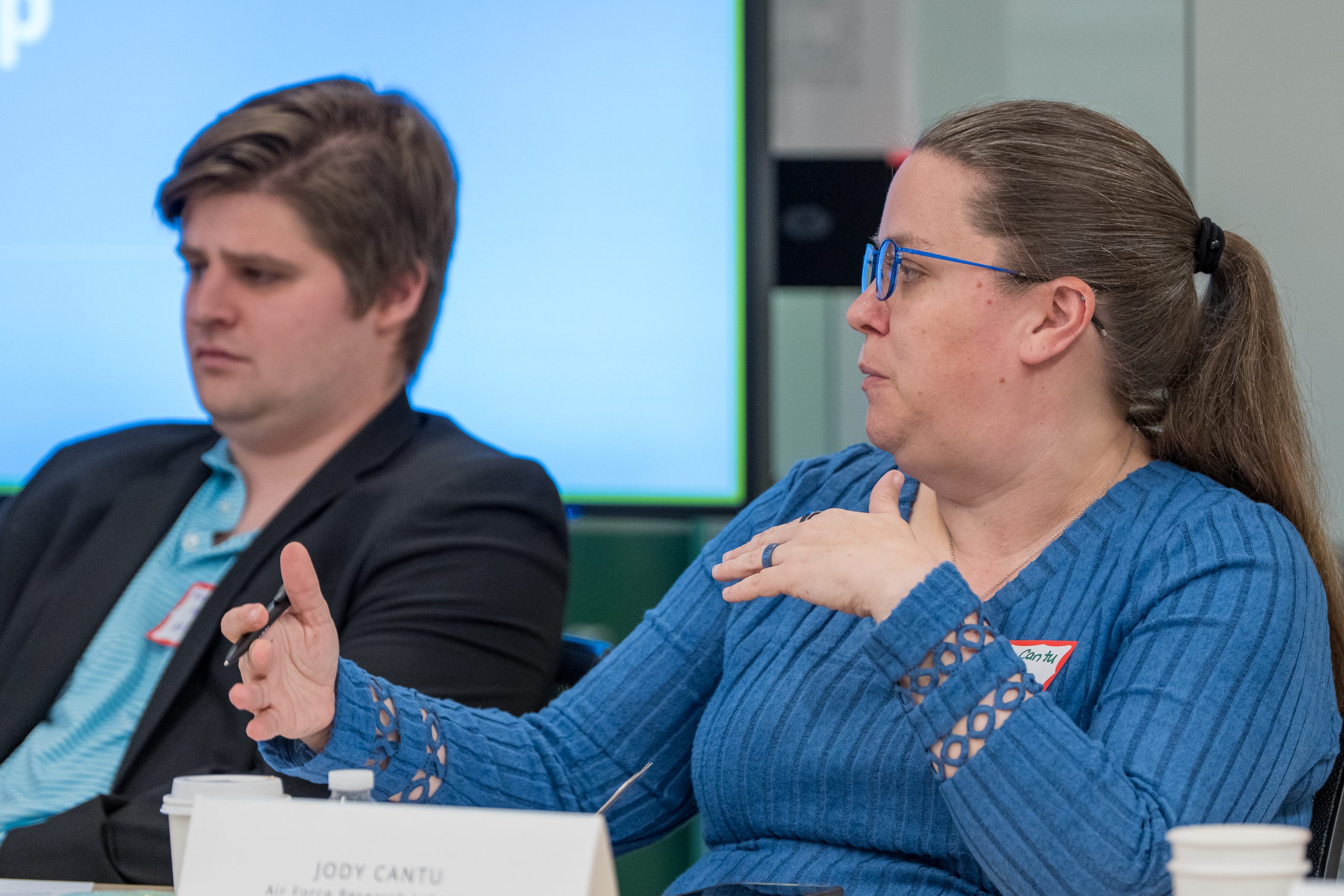
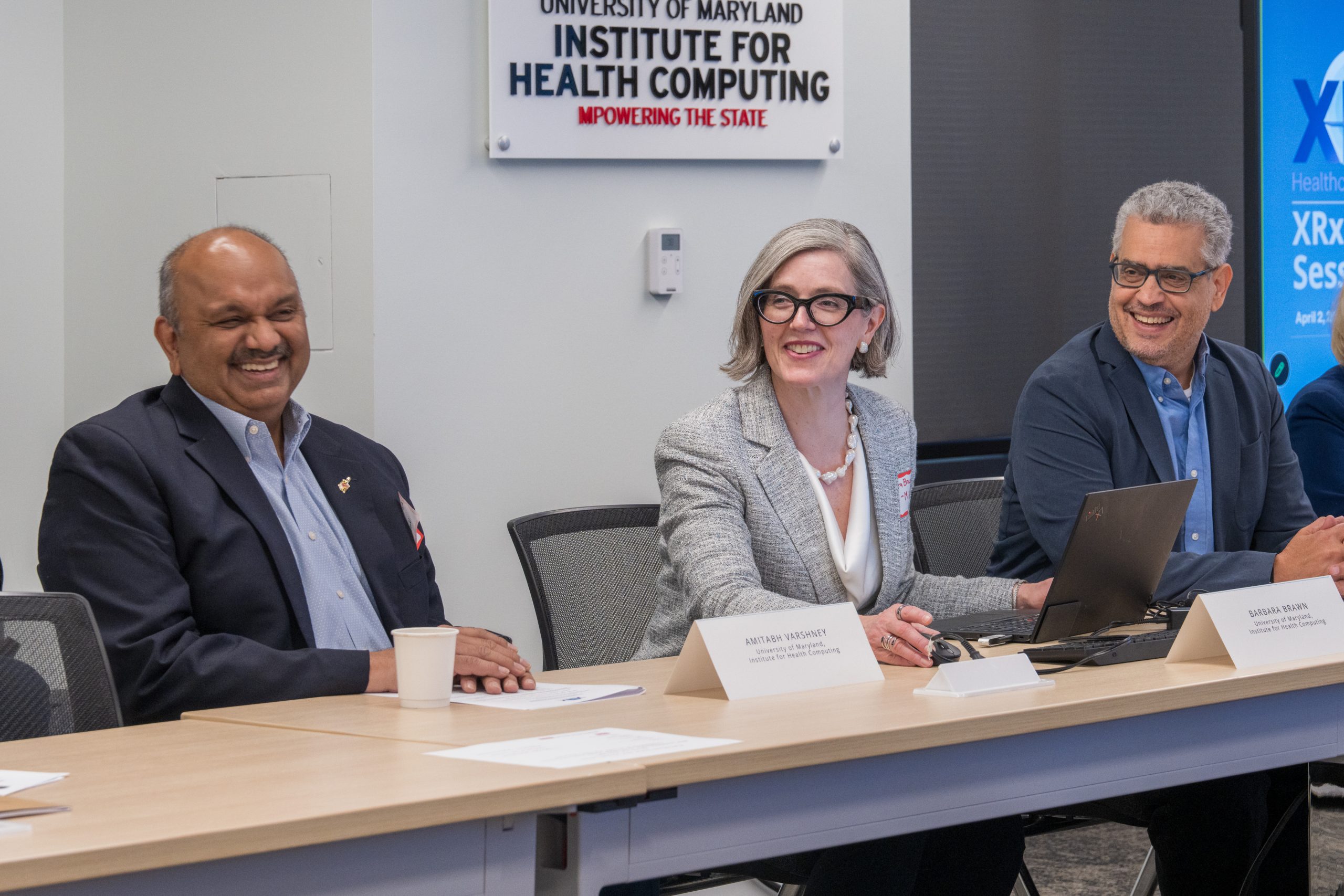
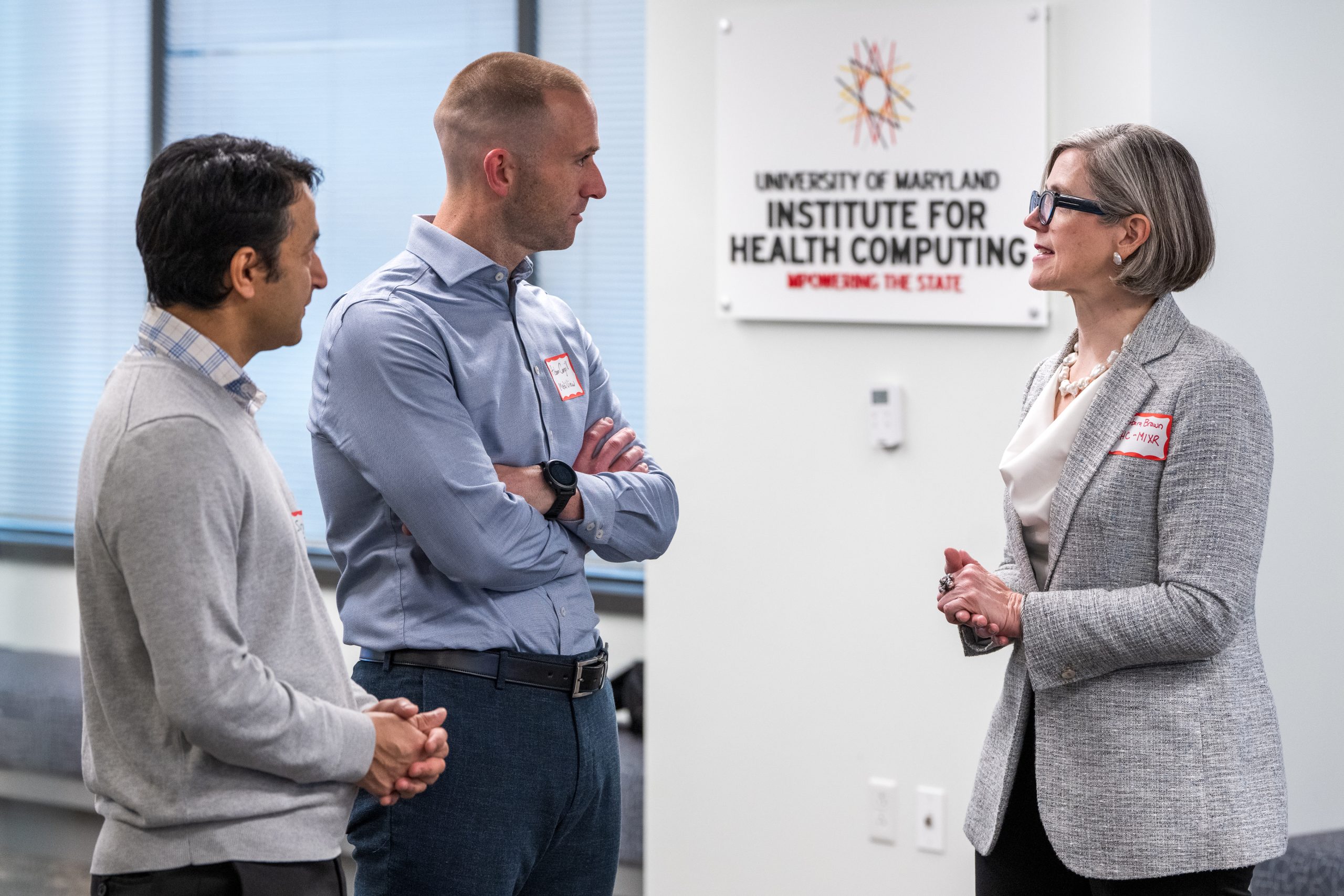
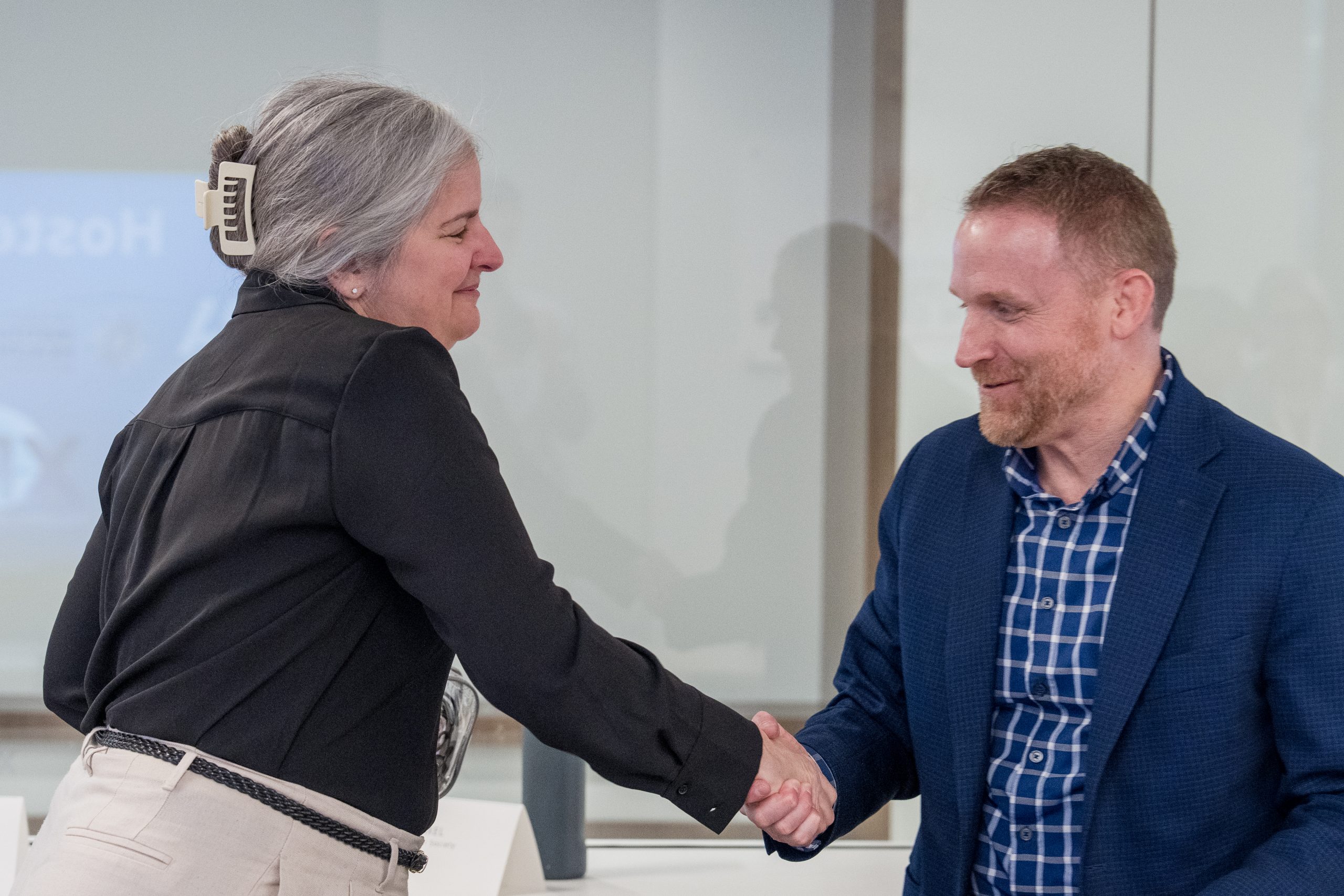
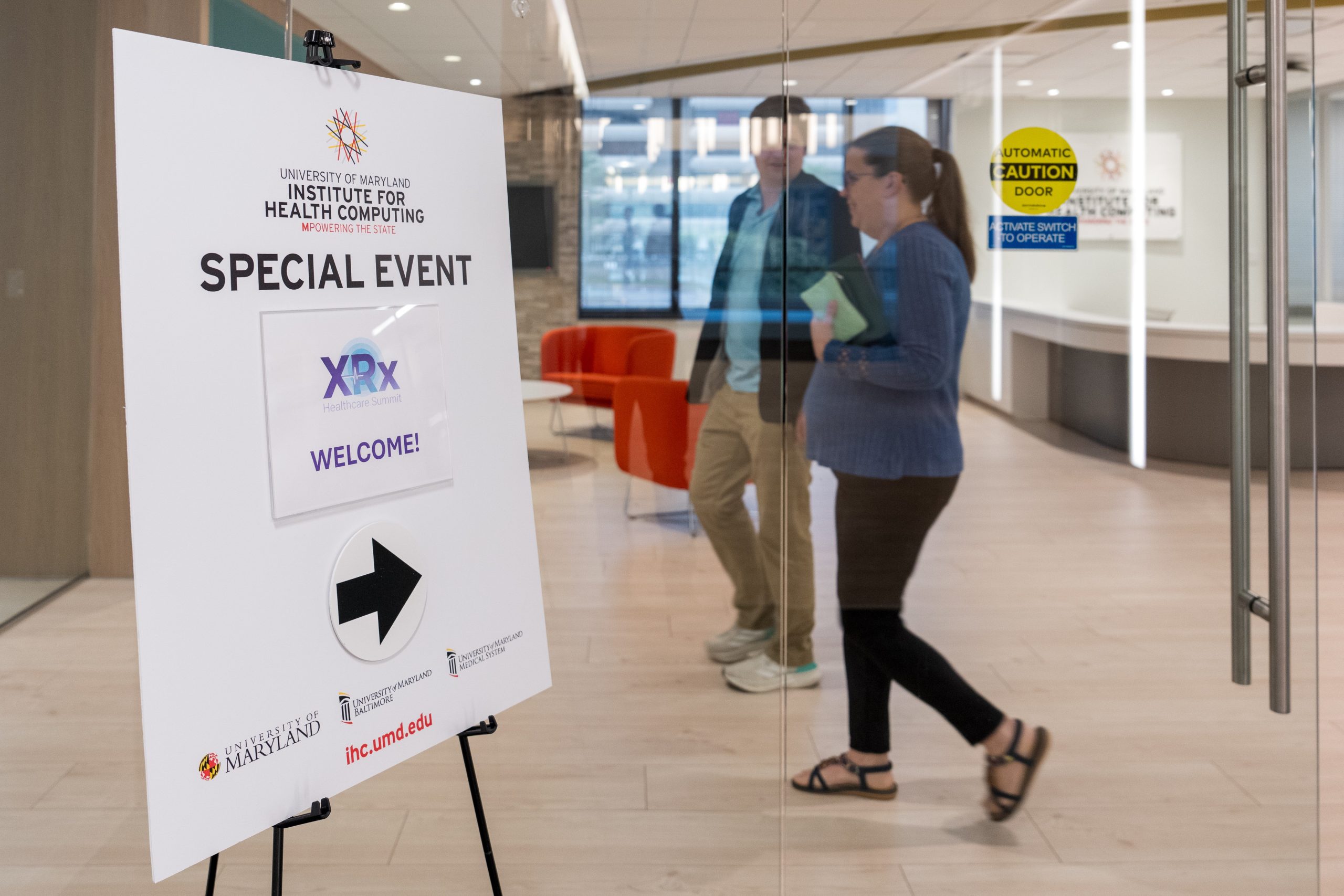
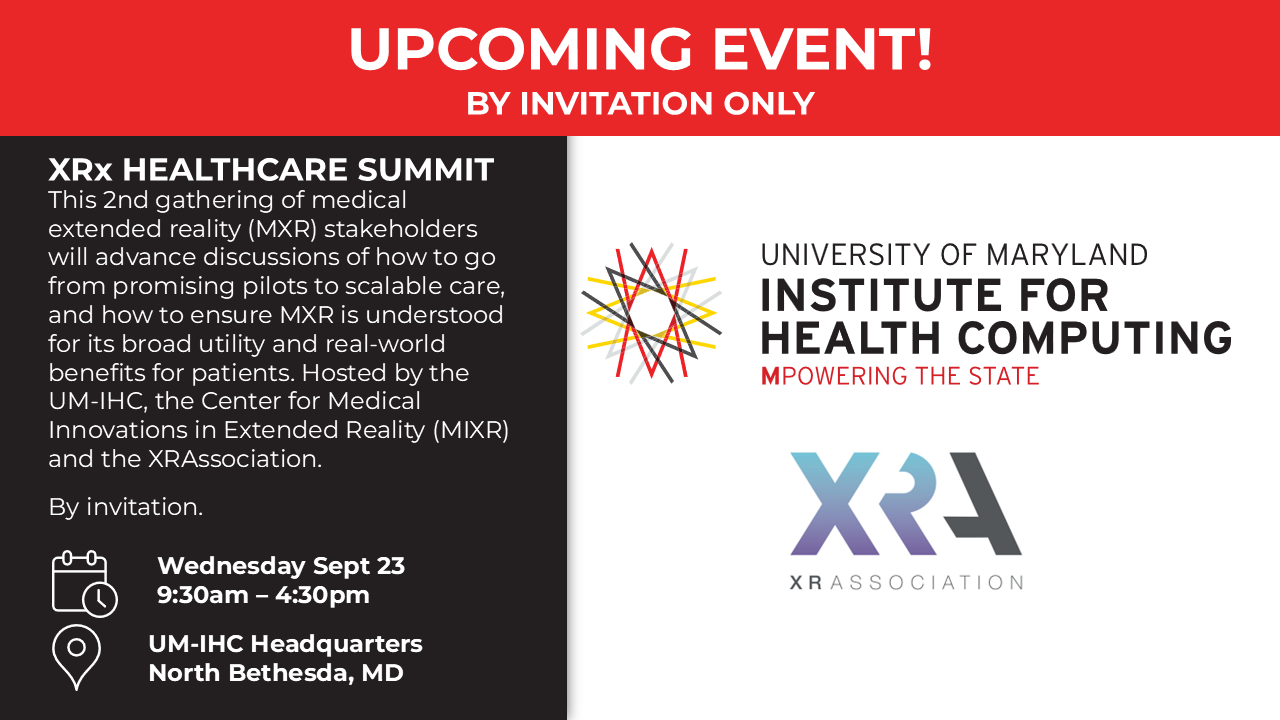
Conversations and ideas flowed freely on April 2, 2026, as the University of Maryland Institute for Health Computing (UM-IHC) and the XR Association (XRA) held the first workshop of the XRx Healthcare Summit.
The gathering took place at the UM-IHC offices in North Bethesda, Maryland.
The summit is a working forum that convenes leading health-system leaders, clinicians, payers, patients, technologists and policymakers to identify concrete pathways for scaling extended reality (XR) in care delivery, workforce training and health system operations. The broader goal of the summit is to address two questions: Why hasn’t XR scaled more rapidly in health care? What can be done to correct this missed opportunity?
“We understand that there is a real gap between proof-of-concept XR deployments and scalable clinical implementation,” said UM-IHC Immersive Visualization Center Director Sujal Bista. “Part of our center’s work is to close that gap. We’re excited to co-host this summit, because its whole purpose is to uncover the barriers that make it difficult.”
The inaugural workshop focused on clinician-facing use cases for XR in health care, particularly in live and near-live care delivery, including diagnosis, treatment, communication and team-based decision-making. Medical universities, physicians, XR solution providers, headset manufacturers and federal government representatives shared their insights, frustrations and passion for XR solutions in multiple health care arenas.
Participants highlighted persistent challenges, including long procurement timelines, issues with medical decision-making, moving from pilot to full deployment and hygiene requirements. Further, attendees noted that each hospital system has unique procurement processes and approval structures, and that there is often no single hospital team with clear ownership of XR devices.
“What’s remarkable about this gathering is the range of people in the room,” said UM-IHC Co-Executive Director Adam Porter, a professor of computer science at the University of Maryland, College Park. “We have clinicians, technologists, payers and policymakers all focused on the same problem. That kind of cross-sector alignment is rare, and it’s exactly what’s needed to move XR from promising innovation to standard of care.”
Porter added: “The IHC is proud to be at the center of that conversation.”
————-
The next XRx Healthcare Summit workshop will focus on patient-facing uses of XR in healthcare. Organizations interested in participating in future sessions should contact Barbara Brawn, UM-IHC’s director of Strategic Initiatives, at bbrawn@umd.edu, or Stephanie Montgomery, XRA’s senior vice president of Research and Best Practices, at smontgomery@xra.org.